What Multigrain Really Delivers to Your Plate
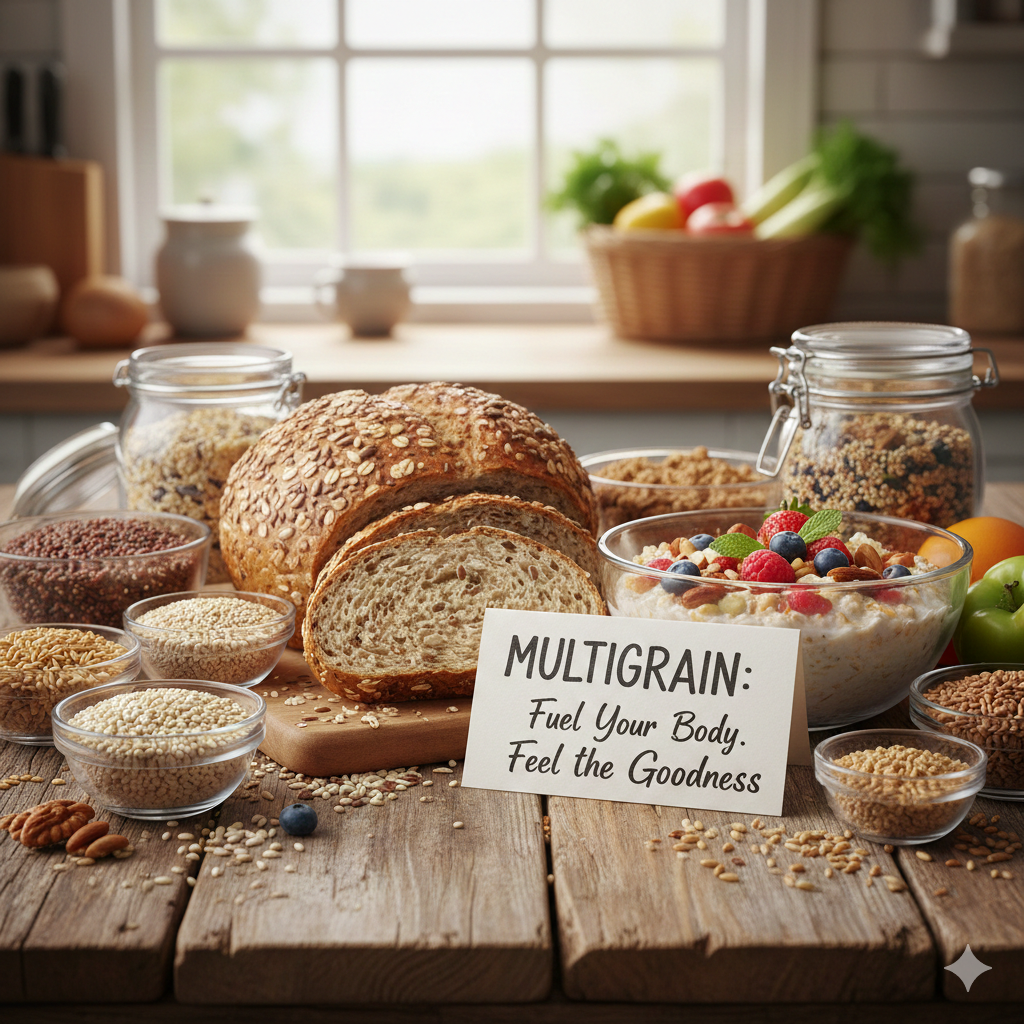
From my own grocery-store experiments and years of reading nutrition labels, multigrain foods often look healthier mutigrain than they act. At their best, these products are genuinely good for you, offering higher fiber, protein, and nutrient density. When they are made from whole grains, they feel more filling and noticeably support improved digestion. As a nutrition expert once told me, this balance is what quietly supports long-term heart health without dramatic diet changes.
The Difference Between Promise and Reality
Here’s the part many people miss. Multigrain simply means multiple grains are used. It does not guarantee quality. Some loaves rely heavily on refined white flour, stripping away benefits. In practice, that makes them far less effective for weight management. This is why it becomes essential to check labels carefully. If the whole grain is not clearly listed, you may want to avoid nutrient-stripped options altogether.
How Smarter Choices Add Up Over Time
When I switched to clearly labeled whole-grain blends, the difference was subtle but real. I stayed full longer, energy dips eased, and meals felt more satisfying. Experts agree this happens because intact grains support steady nutrition instead of quick spikes. Over time, that consistency is what turns a simple food choice into lasting health support rather than another marketing trick.
Key Health Benefits of True Multigrain Foods
How Fiber Changes Everyday Digestion
When I first switched to true multigrain products, I noticed better digestion within weeks. Foods that are rich in fiber gently support the gut, improve overall health, and noticeably reduce bloating. A dietitian I worked with explained that fiber actively aids digestion and supports long-term balance rather than quick fixes.
Blood Sugar Stability You Can Feel
Unlike white bread, true multigrain breads and flours affect the glycemic index differently. They release sugar into the blood gradually, reducing energy spikes. I felt fewer crashes during long workdays, which experts say is a clear metabolic advantage.
Heart Health Through Grain Diversity
One underestimated benefit is improved heart function. The diverse grains in multigrain foods help lower LDL cholesterol levels. Nutrition experts often highlight this slow protective effect as one of the most reliable benefits of consistent whole-grain intake.
Nutrients That Work Together
True multigrain foods are naturally nutrient-dense. They provide a mix of nutrients like iron, magnesium, and essential vitamins. I noticed better stamina once these micronutrients became part of my routine meals.
Weight Management Without Effort
For weight management, the advantage is subtle but powerful. The higher content of fiber helps you feel full longer, improving satiety without restriction. Over time, this steady fullness changes eating habits naturally, something experts often recommend for sustainable results.
Evidence-Based Nutrition Facts About Multigrain Foods
What Research Consistently Shows
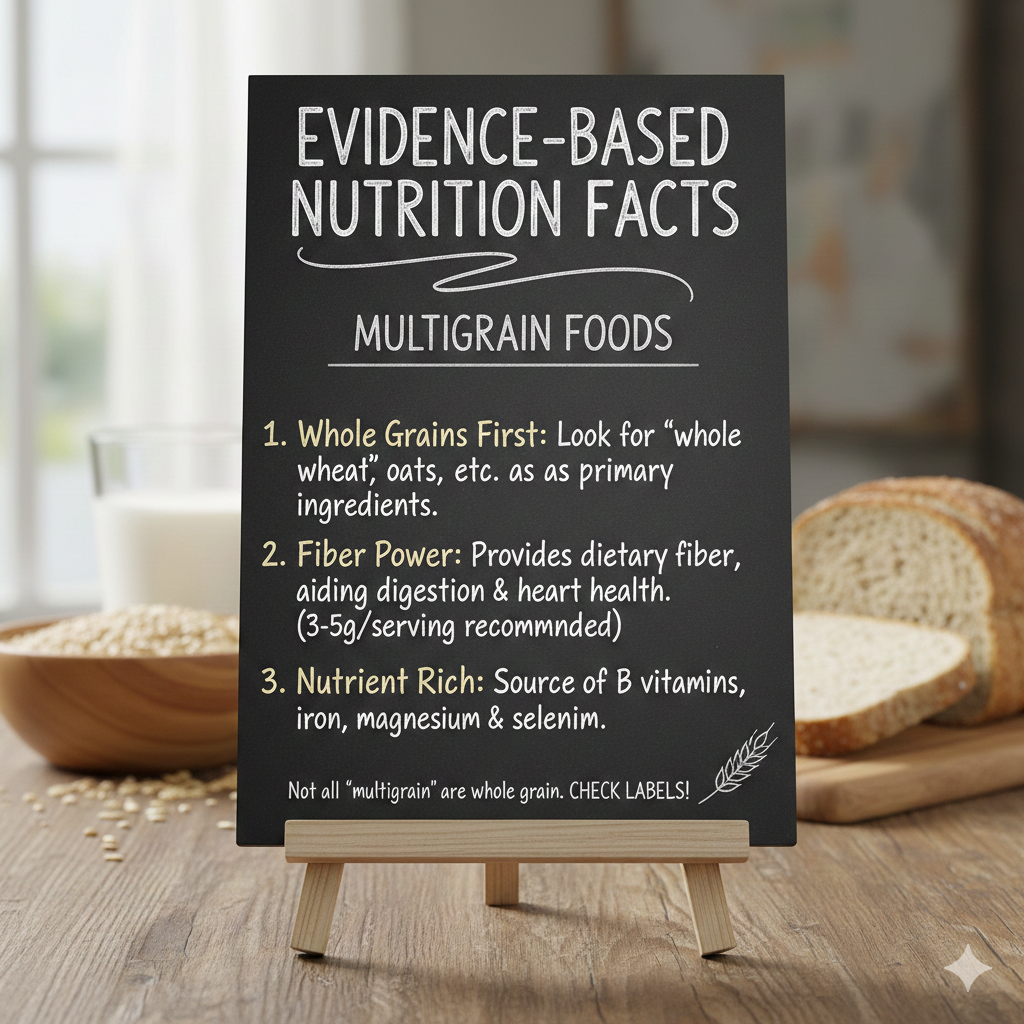
- Diets rich in whole grains are linked to a 20–30% lower risk of heart disease compared to diets high in refined grains.
- Whole grains provide dietary fiber, B vitamins, magnesium, iron, and antioxidants that refined grains lack.
- Fiber intake of 25–38 g/day (recommended range) is associated with better digestion, improved cholesterol levels, and steadier blood sugar control.
- Refined grain products digest faster, causing higher glycemic spikes, which can increase hunger and insulin demand.
Whole Grain vs Multigrain vs Refined Grain (Comparison Table)
| Feature | Whole Grain | Multigrain (Whole-Based) | Multigrain (Refined-Based) |
| Grain Structure | Intact (bran, germ, endosperm) | Multiple intact grains | Mostly stripped grains |
| Fiber Content | High | Moderate–High | Low |
| Blood Sugar Impact | Low–Moderate | Moderate | High |
| Satiety (Fullness) | Long-lasting | Good | Short-lived |
| Heart Health Support | Strong | Moderate–Strong | Weak |
| Label Clarity | Clear | Must be verified | Often misleading |
Fiber Content Comparison (Per Slice / Serving)
| Product Type | Average Fiber |
| White Bread | 0.5–1 g |
| Refined Multigrain Bread | 1–2 g |
| Whole-Grain Multigrain Bread | 3–5 g |
| 100% Whole Wheat Bread | 4–6 g |
Key takeaway: If fiber is under 3 g per serving, the product is likely refined—even if it says multigrain.
Glycemic Impact Comparison
| Food Type | Glycemic Effect | Energy Pattern |
| White Bread | High | Quick spike → crash |
| Refined Multigrain | Medium–High | Temporary energy |
| Whole-Grain Multigrain | Moderate | Steady energy |
| Oats / Barley-Based Multigrain | Low–Moderate | Long-lasting fuel |
Nutrient Density of True Multigrain Foods
| Nutrient | Why It Matters |
| Fiber | Improves digestion, controls appetite |
| Magnesium | Supports muscle & nerve function |
| Iron | Helps oxygen transport |
| B Vitamins | Aid metabolism & brain health |
| Antioxidants | Reduce inflammation |
Label Checklist (Fact-Based Buyer Guide)
✅ First ingredient: “Whole wheat,” “Whole grain oats,” or “100% whole grain”
❌ Avoid: “Enriched flour,” “wheat flour,” or “multi-grain blend” as the first ingredient
✅ Fiber: ≥3 g per serving
❌ Added sugars: More than 3 g per slice weakens health benefits
✅ Short ingredient list = better quality
When Multigrain Is Notthe Best Choice (Facts)
- Celiac disease: Wheat, barley, and rye must be avoided entirely
- Grain sensitivity: Some people tolerate single whole grains better than blends
- Highly processed loaves: Offer little benefit over white bread despite appearance
Evidence-Based Summary
Multigrain foods can be healthy, but only when the grains are whole and intact. The number of grains does not matter as much as their quality. Research consistently shows that whole grains improve digestion, stabilize blood sugar, support heart health, and aid weight management. Marketing terms are unreliable—ingredient lists and fiber content are the true indicators of nutritional value.
Choosing whole-grain multigrain products regularly, in balanced portions, is one of the most sustainable dietary upgrades backed by long-term nutritional evidence.
What to Look for (The “Gotcha”)

Reading Between the Label Lines
The first time I seriously read a store-bought bread label, I realized how misleading packaging can be. A food expert once told me that multigrain on the front means nothing without the back. Many types quietly include refined flour with added sugar, which lowers real nutritional value and weakens long-term health gains.
Ingredient Lists Tell the Real Story
Always watch the ingredient list closely. The first item should be whole grain, not vague blends of several grains. If labels contain mostly fillers, the promised benefits disappear fast. Nutritionists often point out that real grain quality matters more than marketing words.
Common Grains That Help or Hurt
Not all grains perform the same. Wheat and oats can be powerful when kept intact, but stripped versions lose impact. Choosing wisely helps in reducing blood sugar swings and avoiding unnecessary additives. Understanding vs marketing language is what separates informed buyers from confused ones.
When Multigrain Might Not Be Best
When Health Claims Don’t Match Reality
From personal experience, not all products marketed as multigrain support real health. A nutrition expert once warned me that Misleading Marketing often hides refined ingredients behind earthy packaging. Some multigrain loaves are just white flour with a little bit of multiple grains added, which weakens results.
Gluten and Grain Sensitivities Matter
For people with Gluten Sensitivity or Celiac Disease, choices matter even more. Many products contain wheat, barley, or rye, which can quietly trigger symptoms. In these cases, multigrain is not the best option, regardless of how natural it looks.
Labels That Actually Protect You
Experts consistently recommend you choose products labeled 100% whole grain or 100% whole wheat rather than generic multigrain claims. Without that clarity, you risk buying processed blends that offer fewer benefits and poorer results. Understanding what a label truly says is often more powerful than the grain count itself.
Conclusion
In summary, multigrain foods can be healthy and beneficial for digestion, heart health, and weight management, but the key is choosing products made from 100% whole grains. Labels matter more than marketing—multigrain doesn’t automatically mean nutritious. Whether it’s bread, rice, or flour, focusing on whole grains, fiber, and minimal refined ingredients ensures you get the real nutritional benefits. Consuming them wisely, in moderation, and alongside a balanced diet is the most reliable way to make multigrain work for your health.
FAQS
Is multigrain bread healthy or unhealthy?
It depends. Multigrain bread is healthy only if it’s made from 100% whole grains. If it’s mostly refined flour with added grains, it’s closer to unhealthy.
Which is better, whole grain or multigrain?
Whole grain is better. Whole grain guarantees the grain is intact. Multigrain only means “many grains,” not “whole.”
Is multigrain rice healthy to eat every day?
Yes, if it contains mostly whole grains like brown rice, millet, or quinoa. It provides fiber and steady energy. Portion control still matters.
Is it healthy to eat multigrain flour?
Yes, when the flour is stone-ground or labeled 100% whole grain. It supports digestion and blood sugar control better than refined flour.
Is multigrain good for you in Urdu?
جی ہاں، ملٹی گرین غذا آپ کے لیے فائدہ مند ہو سکتی ہے اگر اس میں مکمل اناج شامل ہوں۔ یہ فائبر، ہاضمے اور دل کی صحت کے لیے بہتر ہوتی ہے۔
Is multigrain good for you to lose weight?
Yes. High fiber helps you feel full longer, which supports weight loss, as long as calories are controlled.
Is multigrain good for your stomach?
Yes. Whole-grain multigrain foods improve digestion and gut health. People with sensitive stomachs should introduce it gradually.
Is multigrain good for your heart?
Yes. Whole grains help lower LDL cholesterol and support long-term heart health.
Multigrain bread or brown bread: which is better?
Brown bread made from whole wheat is usually better. Multigrain wins only if all grains are whole.
Is multigrain bread good for weight loss?
Yes, if it’s whole-grain based. Fiber improves satiety and reduces overeating.
Is multigrain good for you Reddit (common consensus)?
Reddit users generally agree: multigrain is only worth it when it’s 100% whole grain. Labels matter more than marketing.
Is multigrain bread healthy for diabetics?
Yes, whole-grain multigrain bread is better than white bread. It has a lower glycemic impact, but portions must be managed.